
Road Construction and the Use of Concrete Hardener
Road construction is one of the most demanding segments in civil engineering. Pavements endure continuous heavy vehicle loads, temperature fluctuations, rainfall exposure, and environmental stress. Durability is not determined by thickness alone — internal material enhancement plays a critical role. Concrete hardener solutions are increasingly used to extend service life and reduce premature deterioration.
Road Construction and the Use of Concrete Hardener
Road construction is one of the most demanding segments in civil engineering. Pavements endure continuous heavy vehicle loads, temperature fluctuations, rainfall exposure, and environmental stress. Durability is not determined by thickness alone — internal material enhancement plays a critical role. Concrete hardener solutions are increasingly used to extend service life and reduce premature deterioration.
Engineers evaluating concrete hardener applications in India focus on long-term wear resistance, structural integrity, and lifecycle cost rather than just initial pricing.
Concrete Hardener Use in Road Building
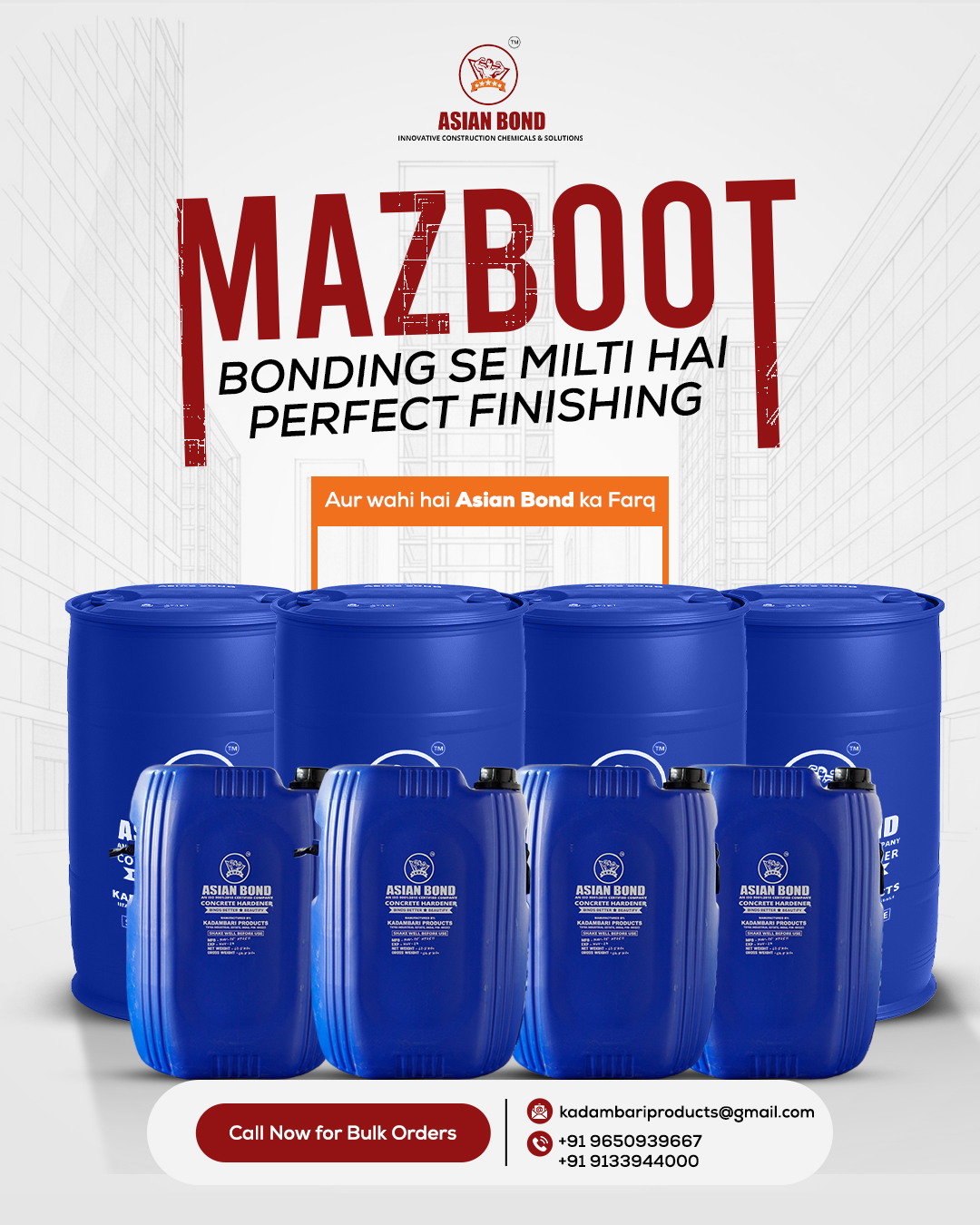
A concrete hardener is a chemical formulation applied during finishing or after curing to increase surface density. Liquid concrete hardeners penetrate deeply into the slab and react with free lime to form additional calcium silicate hydrate (C-S-H).
This chemical transformation:
- Improves compressive strength
- Enhances abrasion resistance
- Reduces dusting
- Increases long-term durability
In modern road engineering, what was once optional has become a strategic enhancement for high-load infrastructure.
Roads Without Hardener Deteriorate Faster
Untreated road surfaces are more prone to:
- Surface abrasion
- Reduced load-bearing capacity
- Dust formation
- Water penetration
- Higher maintenance frequency
In industrial zones, highways, and logistics corridors, chemical hardeners help concrete withstand constant mechanical stress.
Is Concrete Hardener Mandatory for Roads?
Roads can be constructed without hardeners, but lifecycle performance typically declines. The necessity depends on:
- Traffic load intensity
- Projected service life
- Climatic exposure
- Maintenance planning
Highways subjected to heavy truck movement benefit significantly from hardened surfaces compared to low-traffic pavements.
How Concrete Hardener Improves Road Performance
1. Increased Surface Strength
Hardener-treated concrete supports greater compressive loads and resists surface wear under continuous vehicular movement.
2. Reduced Maintenance Costs
Although premium hardeners may involve higher upfront costs, they reduce long-term repair and resurfacing expenses.
3. Improved Dust Control
By chemically binding loose particles, hardeners minimize dust formation — particularly valuable in industrial corridors and rural roads.
4. Better Water Resistance
Reduced porosity limits moisture penetration, helping prevent cracking and freeze-thaw damage.
Concrete Hardener in Paver Block Road Construction
Urban road systems frequently use interlocking paver blocks. Applying concrete hardener during production:
- Enhances edge strength
- Improves weather resistance
- Extends wear life under traffic
Cost comparisons across suppliers should consider penetration depth, abrasion resistance, and long-term performance — not just surface hardener price.
Selecting the Best Concrete Hardener in India
The appropriate hardener depends on:
- Road type (highway, industrial zone, urban street)
- Traffic intensity
- Surface design (slab or paver)
- Environmental conditions
- Budget constraints
Many contractors consult established concrete admixture manufacturers in India for laboratory-tested formulations that comply with construction standards.
Concrete Surface Hardener Cost Considerations
Surface hardener pricing depends on:
- Product quality
- Brand reputation
- Bulk purchase volume
- Supplier location
Large infrastructure projects typically negotiate bulk procurement to reduce per-unit cost while maintaining supply continuity.
Factory Floor Hardener vs Road Hardener
While floor hardeners are commonly used in factories, their abrasion-resistant properties often translate well to road applications. Both environments require resistance to:
- Constant mechanical friction
- Heavy load impact
- Surface degradation over time
Engineers adapt formulations based on terrain conditions and expected stress levels.
Liquid Concrete Hardener for Road Edges and Bricks
Road curbs and brick edges benefit from liquid concrete hardener applications that:
- Increase compressive strength
- Reduce cracking
- Enhance durability under moisture exposure
Buying Concrete Hardener in Bulk for Road Projects
For large-scale road construction, bulk purchasing offers:
- Lower cost per unit
- Stable material availability
- Reduced logistical delays
Contractors should verify certifications, technical documentation, and supplier reliability before finalizing procurement.
Conclusion
Concrete hardeners significantly enhance road durability, reduce maintenance frequency, and improve long-term structural integrity. While not mandatory for every project, they are highly recommended for high-load and industrial applications.
Selecting the right formulation, evaluating supplier credibility, and considering lifecycle cost rather than upfront price ensures stronger, longer-lasting road infrastructure.