
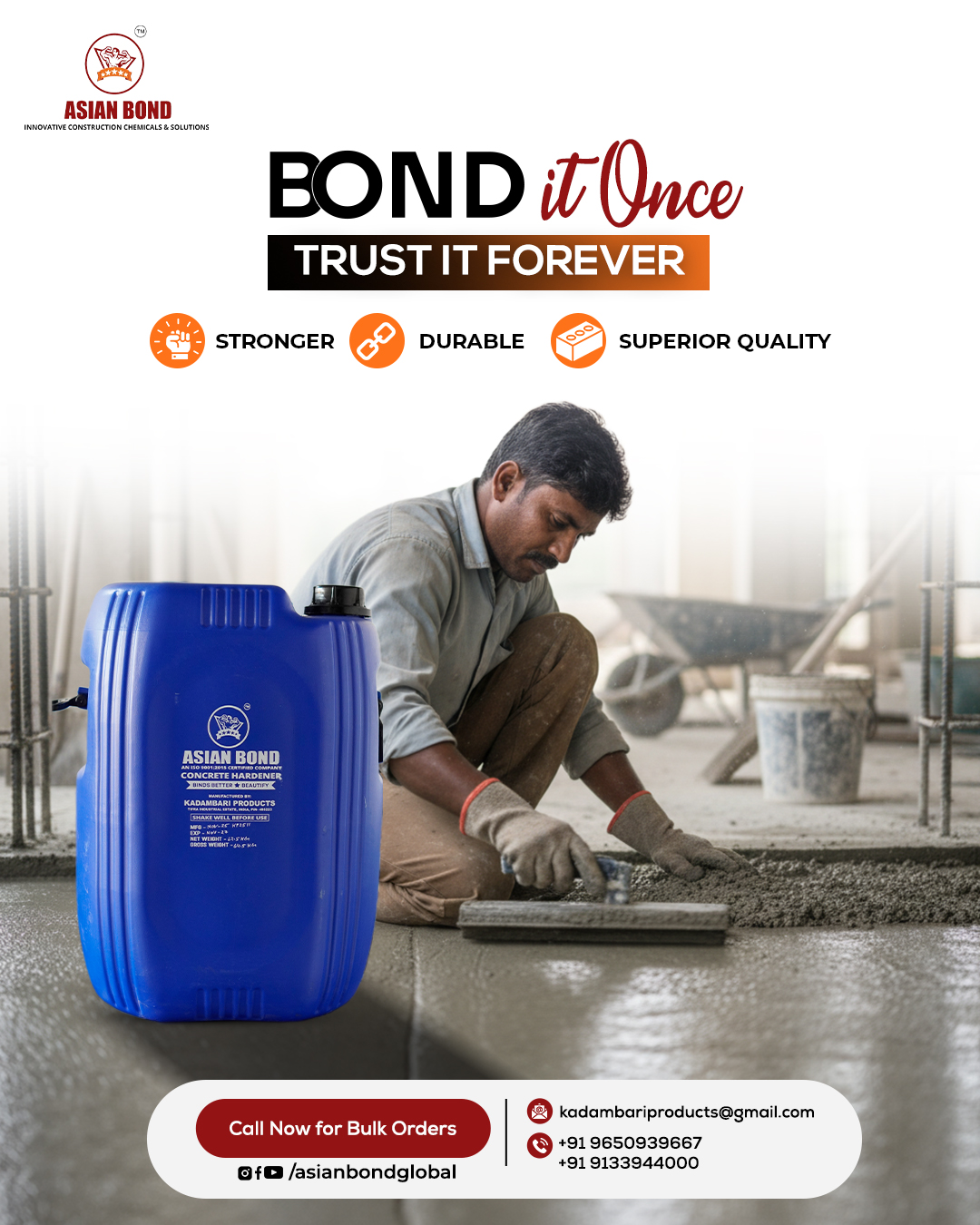
Repairing Weak Concrete with Chemical Hardeners
Even well-constructed concrete surfaces deteriorate over time due to continuous load exposure, environmental stress, and operational wear. Cracking, dusting, premature abrasion, and surface weakening commonly occur in factories, parking areas, warehouses, walkways, and brick structures. When concrete loses strength, it not only reduces structural efficiency but also increases maintenance costs and safety risks.
Repairing Weak Concrete with Chemical Hardeners
Even well-constructed concrete surfaces deteriorate over time due to continuous load exposure, environmental stress, and operational wear. Cracking, dusting, premature abrasion, and surface weakening commonly occur in factories, parking areas, warehouses, walkways, and brick structures. When concrete loses strength, it not only reduces structural efficiency but also increases maintenance costs and safety risks.
Repairing weakened concrete using a high-performance chemical hardener is one of the most cost-effective restoration strategies. Rather than replacing entire slabs, modern hardeners penetrate deep into the surface, chemically strengthening the internal matrix and restoring durability.
Why Concrete Surfaces Become Weak
Weak concrete typically results from:
- Excess water in the mix
- Low-quality raw materials
- Improper curing practices
- Heavy mechanical loads
- Exposure to moisture, chemicals, or frost
Over time, these factors increase porosity and reduce surface density. When untreated, the damage accelerates. Applying a liquid concrete hardener helps tighten the surface structure and improve long-term resilience.
What Is a Chemical Hardener for Concrete?
A chemical hardener for concrete is typically a silicate-based liquid formulation. Once applied, it reacts with calcium hydroxide present within the slab to form additional calcium silicate hydrate (C-S-H), the compound responsible for concrete strength.
This chemical reaction:
- Reduces surface porosity
- Increases compressive strength
- Improves abrasion resistance
- Eliminates surface dusting
The strengthening occurs internally rather than forming a superficial coating, ensuring long-term structural enhancement.
How Concrete Hardener Restores Weak Surfaces
1. Increased Surface Strength
A properly applied concrete hardener significantly improves load-bearing capacity and wear resistance, especially in high-traffic areas such as industrial floors and warehouses.
2. Dust Proofing
Weak concrete often produces surface dust. Chemical hardeners bind loose particles, creating a dense, dust-free finish suitable for operational environments.
3. Higher Load Resistance
Forklifts, heavy machinery, and repeated vehicle movement cause untreated surfaces to deteriorate rapidly. Hardened concrete withstands repeated mechanical stress with reduced cracking.
4. Cost-Effective Restoration
Instead of removing and replacing damaged slabs, applying a liquid concrete hardener restores strength at a fraction of replacement cost.
5. Long-Term Durability
Because hardeners penetrate deeply, they strengthen concrete from within, providing durable performance rather than temporary surface improvement.
Step-by-Step Process to Repair Weak Concrete
Step 1: Surface Inspection
Assess cracks, powdering, and structural condition. Surface-level deterioration can usually be treated effectively with a concrete hardener.
Step 2: Surface Cleaning
Remove dust, grease, debris, and contaminants to allow deep penetration of the liquid hardener.
Step 3: Crack Repair
Repair visible cracks using appropriate patching materials before applying the hardener.
Step 4: Application
Apply the liquid concrete hardener evenly using a roller or sprayer. Ensure uniform coverage and allow sufficient absorption time.
Step 5: Curing and Drying
Allow the treated surface to cure properly. Avoid heavy traffic until full chemical reaction and hardening are complete.
Industrial Applications of Floor Hardener Chemical
Floor hardener chemical solutions are widely used in:
- Manufacturing facilities
- Logistics hubs
- Parking structures
- Warehouses
- Brick and paver block production units
In such environments, hardened surfaces resist abrasion, impact, and repetitive loading.
Concrete Surface Hardener Cost Factors
Concrete surface hardener pricing depends on:
- Product quality and formulation
- Brand reputation
- Bulk purchase volume
- Supplier location
Purchasing concrete hardener in bulk typically reduces per-unit cost and ensures consistent supply for large projects.
Selecting the Right Concrete Hardener
When choosing a hardener, evaluate:
- Penetration depth
- Compatibility with existing concrete
- Long-term performance data
- Technical certifications
- Supplier reliability
Reputable concrete admixture manufacturers in India provide technical documentation and performance validation to support application decisions.
Conclusion
Repairing weak concrete with chemical hardeners is a strategic, cost-efficient solution for extending structural lifespan. Rather than replacing damaged slabs, penetrating hardeners restore internal density, improve abrasion resistance, and reduce maintenance frequency.
Selecting high-quality products, ensuring proper application, and considering lifecycle performance over upfront cost delivers stronger, longer-lasting concrete surfaces across industrial and commercial environments.