
How Today’s Concrete Hardeners Help the Environment
Modern concrete hardeners do more than strengthen floors — they quietly reduce environmental impact across the entire lifecycle of a structure. By extending service life, they reduce how often concrete must be repaired or replaced. Fewer rebuilds mean less raw material use, lower emissions, and reduced waste overall. Asianbond stands out in this shift, offering formulations engineered for durability with cleaner chemistry.
How Today’s Concrete Hardeners Help the Environment
Modern concrete hardeners do more than strengthen floors — they quietly reduce environmental impact across the entire lifecycle of a structure. By extending service life, they reduce how often concrete must be repaired or replaced. Fewer rebuilds mean less raw material use, lower emissions, and reduced waste overall. Asianbond stands out in this shift, offering formulations engineered for durability with cleaner chemistry.
Understanding Concrete Hardeners
Concrete hardeners work by reacting inside the pores of cured concrete. Instead of forming a surface coating, they penetrate deep and trigger densification within the slab. Asianbond formulations reach farther than many alternatives used across India, creating strength that lasts far longer than surface-applied systems.
Because the treatment becomes part of the concrete, fewer repairs are required over time. This directly reduces consumption of replacement materials and lowers long-term environmental strain.
Reduced Material Waste
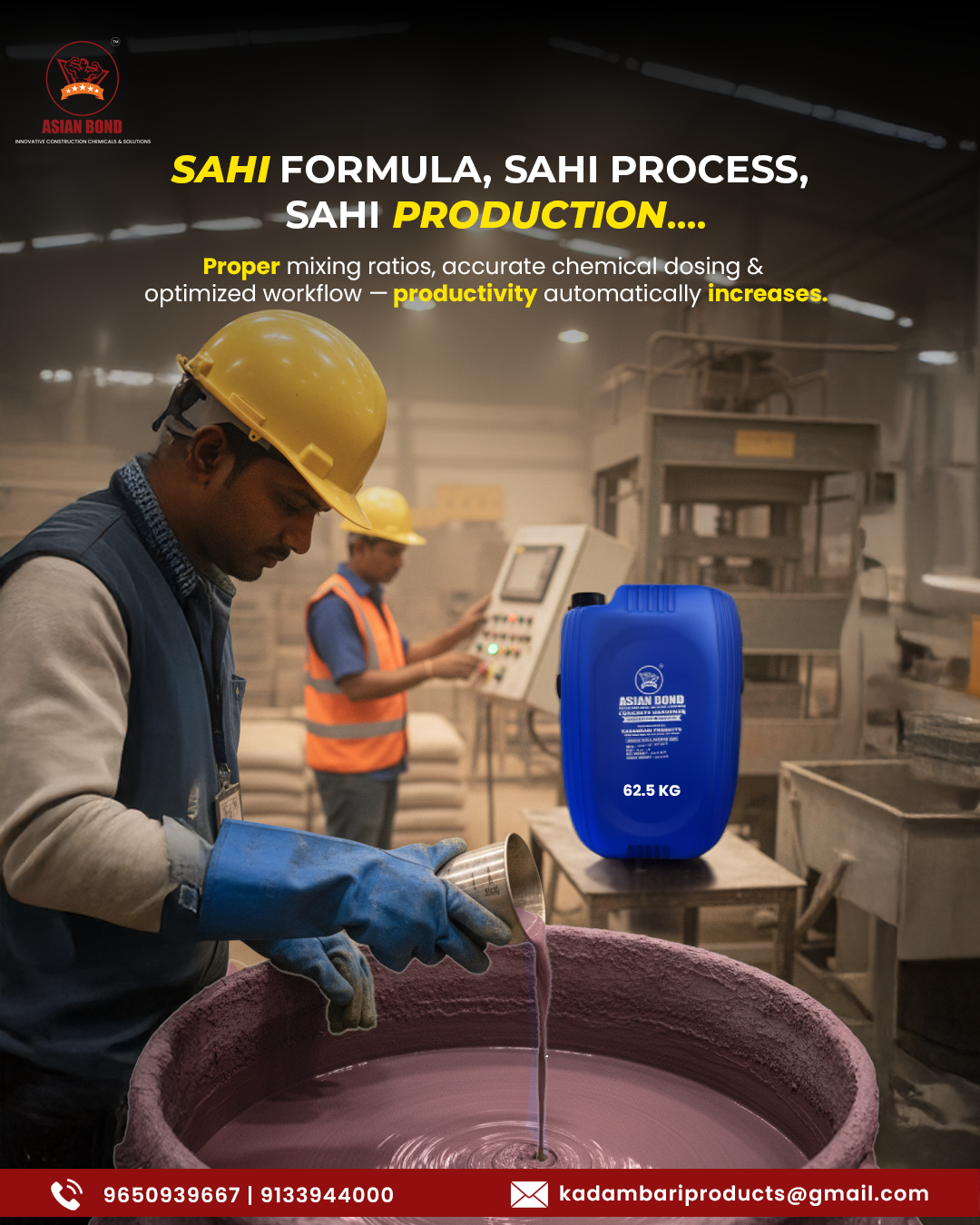
Durability is one of the simplest sustainability strategies. Industrial floors treated with Asianbond concrete hardener resist dusting and cracking, which prevents premature demolition or resurfacing. Factory slabs remain functional for decades instead of years.
Hardened paver blocks are far less likely to crack or be discarded. As durability increases, landfill waste drops naturally. Ordering concrete hardener in bulk further reduces packaging waste by minimizing single-use containers.
Lower Carbon Footprint
Cement production is carbon-intensive. By increasing concrete strength with chemical hardeners, builders can often use less cement overall. Asianbond’s liquid additives enhance performance through precise molecular reactions, allowing thinner slabs and reduced aggregate demand.
Fewer quarry loads, fewer transport trips, and less cement consumption all translate into lower emissions. Additionally, Asianbond formulations are designed with low VOC content, helping projects meet green building benchmarks without compromising performance.
Water Conservation Benefits
Hardened concrete absorbs far less moisture. Treated floors resist staining and dirt buildup, reducing the need for frequent washing and high-pressure cleaning. Over time, this saves substantial volumes of water.
Faster-setting hardeners also reduce curing water loss. With Asianbond systems, concrete reaches stability sooner, minimizing the need for added moisture during finishing stages.
Dust and Pollution Control
Concrete dust is a major indoor air pollutant. By sealing internal pores, Asianbond hardeners stop fine particles from becoming airborne. This improves air quality in factories, warehouses, and enclosed spaces.
Outdoors, hardened paver blocks prevent dust runoff during rain, protecting surrounding soil and waterways from contamination.
Energy Efficiency Gains
Dense concrete surfaces reflect more sunlight and absorb less heat. When Asianbond liquid hardener is applied to pavers and walkways, surface temperatures drop slightly, contributing to lower urban heat buildup.
Longer-lasting roads and floors also reduce energy-intensive reconstruction cycles. Less demolition means less fuel burned by heavy machinery.
Biodiversity Protection
Hardened concrete limits the migration of harmful chemicals into surrounding soil. Asianbond solutions lock contaminants at the surface, allowing spills to be cleaned before they seep into natural habitats.
By extending structure life, repeated construction disruptions are avoided — preserving nearby ecosystems and reducing land disturbance.
Low VOC Formulations and Emissions Control
Today’s concrete hardeners increasingly rely on solvent-free chemistry. Asianbond’s low-VOC systems meet strict air-quality regulations, improving safety for workers and surrounding communities.
Cleaner curing processes mean fewer fumes, healthier indoor environments, and reduced compliance risks for builders.
Recycling and Circular Economy Support
Stronger concrete is easier to reuse later. Hardened factory floors maintain integrity longer, allowing reclaimed material to be recycled more effectively.
Asianbond liquid hardener also strengthens modular brick systems, making future disassembly and reuse more practical — a key principle of circular construction.
Applications in Pavers and Factory Floors
Treated paver blocks manage runoff efficiently while remaining permeable. Rainwater flows naturally, reducing surface flooding without sealing the ground completely.
In factories, Asianbond floor hardener reduces reliance on aggressive cleaning chemicals and minimizes slurry waste during polishing operations.
Cost-Effective Sustainability
Although hardened concrete may cost slightly more upfront, long-term savings far outweigh initial expenses. Fewer repairs, lower cleaning costs, and longer service life create measurable financial and environmental benefits.
Bulk purchasing further improves efficiency while supporting greener construction practices.
Innovation in Concrete Chemistry
Indian concrete admixture makers are moving toward bio-based and nano-silicate technologies. Asianbond continues refining formulations to reduce environmental impact without sacrificing durability.
Deeper penetration, smarter reactions, and gentler ingredients define the next generation of concrete hardeners.
Urban Stormwater and Soil Protection
Properly hardened surfaces guide water flow while protecting surrounding soil chemistry. Asianbond products prevent alkaline leaching, safeguarding nearby farmland and green zones.
Air Quality Improvements
Reduced dust means cleaner air. Floors treated with Asianbond lock fine particles inside the slab, lowering respiratory risks in industrial and residential environments alike.
Lifecycle Performance Advantage
From installation to end-of-life reuse, concrete treated with modern hardeners performs better environmentally. Asianbond stands out by delivering long-term emissions reduction through extended durability.
Future-Proofing Construction
Climate stress is increasing. Asianbond concrete solutions are engineered for extreme heat, moisture, and seasonal shifts — resilience is designed into the chemistry, not added later.
Best Practices for Sustainable Application
Using the correct dosage ensures maximum benefit with minimal waste. Thin, well-distributed applications deliver deep performance without excess material.
Maintenance Savings and Community Health
Hardened surfaces need only basic cleaning — often just water. No harsh detergents are required. This reduces chemical discharge and improves indoor air quality for surrounding communities.
Scaling for Infrastructure Projects
Large-scale developments demand materials that balance performance with sustainability. Asianbond supports megaprojects while conserving resources through longer-lasting concrete systems.
Verdict on Asianbond
Asianbond concrete hardener delivers measurable environmental benefits alongside proven durability. Its chemistry reduces waste, emissions, water use, and maintenance demands — making it a responsible choice for modern construction.
When durability meets cleaner chemistry, long-term sustainability follows. Asianbond stands as a reliable solution for paver blocks, factory floors, and infrastructure built to last without harming the environment.