
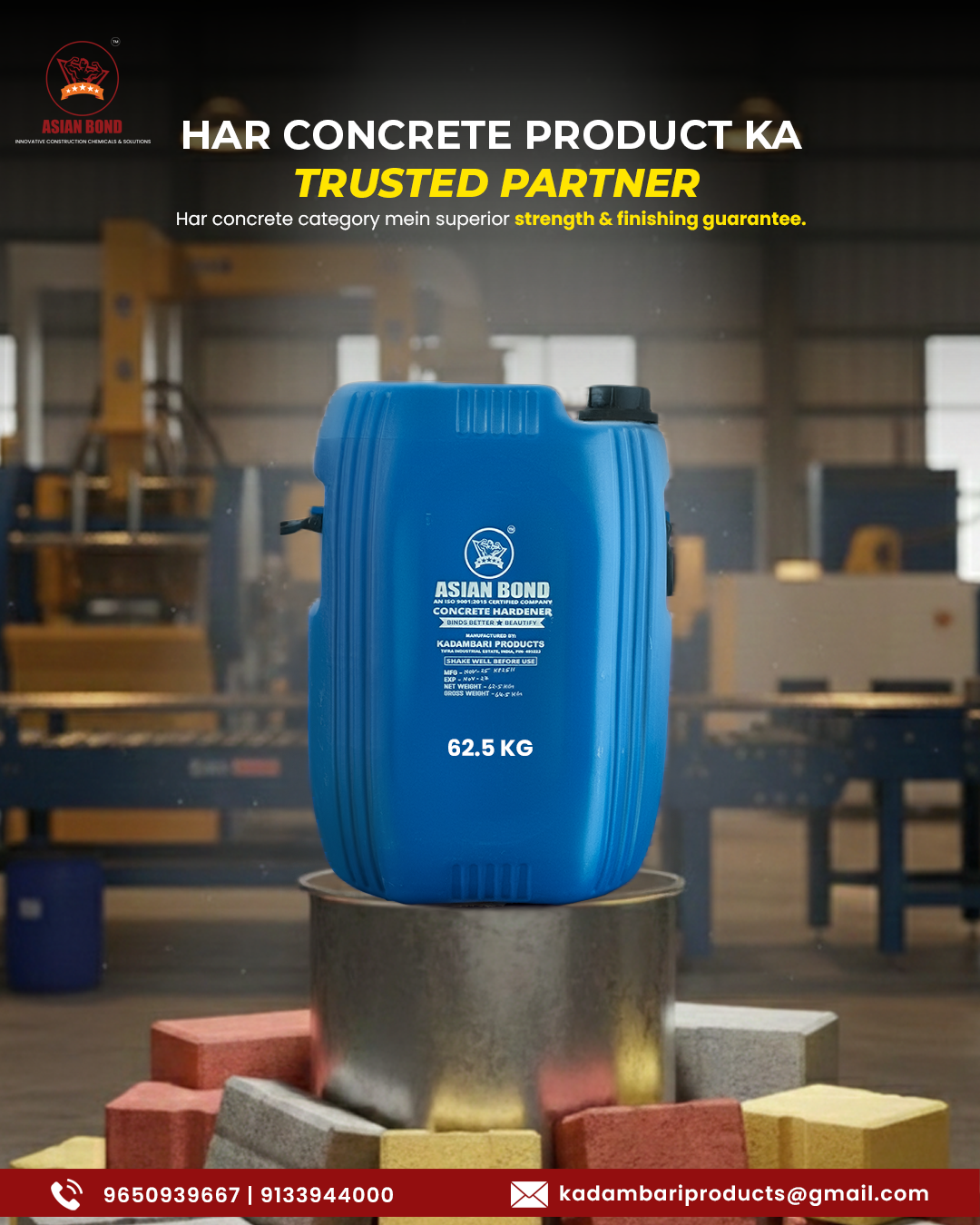
Floor Hardener Enhances Concrete Longevity
Concrete surfaces are everywhere — industrial plants, warehouses, parking areas, malls, airports, and even residential spaces. Over time, untreated slabs can crack, produce dust, and deteriorate under heavy loads. Applying a floor hardener transforms standard concrete into a tougher, more durable surface built to withstand long-term stress.
Floor Hardener Enhances Concrete Longevity
Concrete surfaces are everywhere — industrial plants, warehouses, parking areas, malls, airports, and even residential spaces. Over time, untreated slabs can crack, produce dust, and deteriorate under heavy loads. Applying a floor hardener transforms standard concrete into a tougher, more durable surface built to withstand long-term stress.
Choosing the best concrete hardener in India is essential when durability and lifecycle performance matter. This guide explains how floor hardeners work, their types, applications, pricing factors, and selection criteria.
What Is a Floor Hardener?
A floor hardener is a chemical compound added during or after concrete finishing to strengthen the surface layer. It increases density, reduces porosity, and enhances abrasion resistance. The result is a slab that supports heavy loads, resists cracking, and minimizes dust formation.
Floor hardeners are commonly used in:
- Factory floors
- Warehouses
- Paved pathways
- Parking structures
- Paver block production units
Why Concrete Floors Require Hardening
Although concrete appears strong, untreated surfaces may:
- Generate surface dust
- Crack under heavy loads
- Absorb water and chemicals
- Wear down due to friction
Adding a chemical hardener — either mixed in or applied to the surface — significantly improves long-term durability and performance.
Types of Concrete Floor Hardeners
1. Dry Shake Hardener
Broadcast over freshly poured concrete and mechanically trowelled into the surface. Creates a dense, wear-resistant layer ideal for high-traffic industrial zones.
2. Liquid Hardener
Penetrates porous surfaces and reacts chemically to strengthen existing concrete. Suitable for renovation and surface upgrading.
3. Metallic Floor Hardener
Designed for extremely heavy-duty industrial environments where machinery movement and impact loads are constant.
Benefits of Concrete Hardening
1. Increased Durability
Strengthens the top layer, reducing cracks and surface wear over time.
2. Dust-Free Surface
Proper hardening minimizes dust formation in warehouses and commercial spaces.
3. Improved Abrasion Resistance
Floor hardener chemicals resist continuous mechanical traffic from forklifts, vehicles, and equipment.
4. Cost Efficiency Over Time
Although initial pricing varies, reduced maintenance and longer lifespan result in lower overall lifecycle cost.
5. Enhanced Performance for Paver Blocks
In manufacturing, concrete hardener improves surface strength, weather resistance, and load-bearing capacity of paver blocks.
Features of the Best Concrete Hardener in India
- High durability in humid and hot climates
- Strong abrasion resistance
- Long service life
- Value for money
- Compatibility with local concrete grades
Leading concrete admixture manufacturers in India tailor formulations to regional environmental conditions for consistent performance.
Applications of Floor Hardeners
- Warehouses
- Industrial factories
- Parking areas
- Shopping malls
- Airports
- Residential flooring
- Paver block manufacturing
Concrete Surface Hardener Pricing Factors
The cost of concrete surface hardener depends on:
- Dry or liquid formulation
- Brand quality
- Required quantity
- Project size
- Supplier location
Bulk purchasing often reduces per-unit cost, especially for large industrial or commercial projects.
Floor Hardener Chemicals in Factories
Industrial floors experience:
- Heavy machinery loads
- Oil and chemical spills
- Continuous traffic
- Impact damage
Proper floor hardening extends service life and prevents premature surface deterioration in such environments.
Selecting the Right Concrete Hardener
- Verify manufacturer credibility
- Compare concrete surface hardener prices
- Check compliance with IS standards
- Request technical documentation
Durability and technical reliability are more important than choosing the lowest price option.
Advantages of Bulk Purchasing
- Lower cost per kilogram
- Consistent material supply
- Reduced transportation costs
- Better pricing negotiation
Large projects and manufacturing units benefit from buying concrete hardener in bulk from reliable suppliers.
Environmental and Long-Term Benefits
Hardened concrete requires fewer repairs and less resurfacing, reducing material waste over time. Extended structural life supports sustainable construction practices and lowers overall resource consumption.
Frequently Asked Questions
1. What is the purpose of a concrete hardener?
It increases surface toughness, reduces dust formation, and improves abrasion resistance.
2. Which is the best concrete hardener in India?
The best option depends on usage type, environmental conditions, and load requirements.
3. Can concrete hardener be used for paver blocks?
Yes. It improves surface strength and weather resistance in paver manufacturing.
4. What is the typical cost?
Pricing varies by brand, formulation, and order quantity. Bulk purchases often reduce per-unit cost.
5. How can I find a concrete hardener supplier near me?
Contact local distributors or established concrete admixture manufacturers for certified products and technical support.