
Environmental Benefits of Modern Concrete Hardeners
What sets modern concrete hardeners apart is not only durability, but how effectively they reduce environmental strain. Longer-lasting concrete means fewer repairs, fewer replacements, and less construction waste over time. Selecting a reliable solution such as AsianBond helps projects avoid repeated rebuilds, lowering fuel use, material consumption, and emissions linked to transport and maintenance.
Environmental Benefits of Modern Concrete Hardeners
Strength That Reduces Environmental Impact
What sets modern concrete hardeners apart is not only durability, but how effectively they reduce environmental strain. Longer-lasting concrete means fewer repairs, fewer replacements, and less construction waste over time. Selecting a reliable solution such as AsianBond helps projects avoid repeated rebuilds, lowering fuel use, material consumption, and emissions linked to transport and maintenance.
Instead of dramatic changes, the environmental advantage comes quietly through smarter chemistry. Over years of use, the right concrete hardener steadily reduces resource demand while maintaining performance.
Understanding Modern Concrete Hardeners
Modern concrete hardeners are not surface coatings. They are reactive liquids that penetrate the slab and chemically bond with free lime inside the concrete. This reaction fills internal voids and strengthens the structure from within.
Most current formulations are water-based, producing minimal fumes during application. Once absorbed, they tighten the surface zone, reduce dust formation, and increase resistance to abrasion, spills, and chemical exposure.
By creating water-insoluble compounds deep within the concrete, these hardeners limit moisture entry and reduce vulnerability to oils and chemicals. The surface becomes denser, less porous, and more resilient.
AsianBond and Sustainable Concrete Solutions
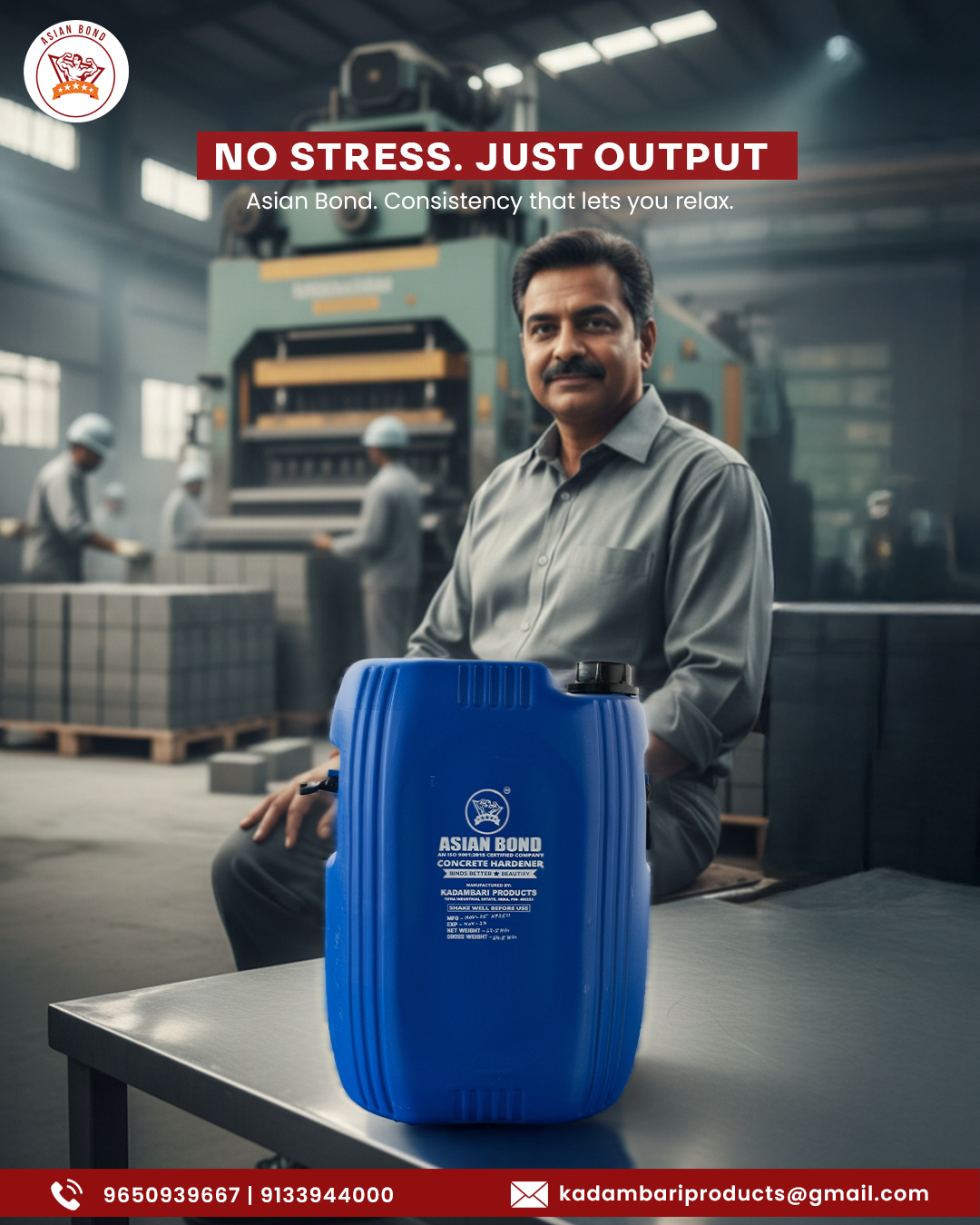
Across India, AsianBond supplies concrete hardeners in liquid and powder formats tailored for bricks, pavers, and flooring systems. Their formulations are adjusted for specific applications, ensuring consistent performance in homes, offices, factories, and industrial zones.
Contractors increasingly choose AsianBond where durability must align with environmental responsibility. These products deliver long-term strength without adding unnecessary ecological burden.
Concrete Hardeners in Sustainable Construction
Longevity is one of the most effective sustainability strategies. A hardened concrete surface lasts longer, reducing the need for demolition, resurfacing, and material replacement. Life-cycle studies consistently show that maintaining existing concrete has a far lower carbon footprint than rebuilding.
Factory floors treated with durable hardeners resist wear, chemical spills, and cracking. As damage slows, maintenance intervals extend. Over decades, this translates into lower energy use, fewer raw materials, and reduced waste generation.
Contractors sourcing concrete hardener in bulk from environmentally conscious producers such as AsianBond benefit from both economic and ecological efficiency. One treatment covers large areas while extending service life significantly.
Reduced Dust and Healthier Air
Untreated concrete releases fine dust particles over time, degrading indoor air quality in warehouses, workshops, and storage facilities. Modern silicate-based hardeners chemically stabilize the surface, locking in particles and sharply reducing airborne dust.
Sealed surfaces resist abrasion, reduce alkali migration, and require less aggressive cleaning. This lowers water usage and decreases reliance on chemical cleaners after curing.
In busy factories, AsianBond floor hardeners reduce cleaning frequency, limit deep scrubbing, and extend coating life. Less machinery operation means lower energy consumption and fewer chemicals entering drainage systems.
In paver block yards, dust control improves worker conditions and reduces particulate spread into nearby communities. Hardened blocks remain stable under handling, limiting airborne debris without additional effort.
Lower Carbon and Resource Consumption Over Time
Cement production is a major source of global CO₂ emissions. Extending the life of existing concrete directly reduces future cement demand. Hardened slabs resist abrasion, chipping, and surface breakdown, delaying repairs and resurfacing.
Stronger bonds between cement paste and aggregates slow wear significantly. Fewer patch jobs, overlays, and demolitions translate into reduced material extraction and transport emissions.
Maintaining and strengthening existing concrete consistently outperforms replacement in environmental terms. Durability upgrades create lighter ecological footprints than repeated reconstruction.
Water-Based Formulations with Low VOCs
Modern water-based concrete hardeners emit fewer volatile organic compounds. Odour is minimal during application, improving safety for indoor use and aligning with green building standards.
Cleaner ingredient choices reduce pollution at the source. Sustainability begins with formulation, not only with application methods. AsianBond’s products reflect this shift toward safer chemistry.
Compared to older surface coatings that crack and require harsh removal processes, hardened concrete offers a longer-lasting and less disruptive alternative.
Where Environmental Gains Are Highest
Factory and Warehouse Floors
Industrial floors face constant stress from machinery, vehicles, and spills. Hardened surfaces resist damage longer, reducing repairs and material use over time. Fewer maintenance cycles mean lower environmental impact.
Paver Blocks, Outdoor Pavements, and Yards
Outdoor pavers endure weather extremes and traffic. Hardened pavers resist cracking, edge breakdown, and oil penetration. Easier cleanup reduces chemical use, while extended service life cuts waste.
Bricks, Precast, and Block Manufacturing
Liquid concrete hardeners strengthen bricks and blocks during production, reducing breakage during handling and transport. Higher yield and lower rejection rates directly reduce waste.
Integrating advanced hardeners into manufacturing lines enables stronger masonry products with lower environmental cost per unit produced.
Cost, Value, and Environmental Return
Evaluating only initial cost overlooks long-term environmental and economic effects. Fewer repairs mean less material consumption, reduced transport emissions, and lower tool and energy use.
True value includes coverage efficiency, service life extension, VOC levels, and verified performance. These factors increasingly guide sustainable construction choices in India.
AsianBond supports bulk buyers with dosing guidance, application advice, and steady supply, ensuring both durability and environmental gains are maximized.
AsianBond Sustainability in India
AsianBond focuses on producing concrete hardeners that combine strength, consistency, and environmental responsibility. Their formulations reduce dust, extend lifespan, and minimize waste without relying on aggressive chemicals.
With reliable distribution across India, AsianBond supports construction teams with dependable supply, technical support, and consistent quality. Fewer failures and longer-lasting surfaces translate into measurable environmental benefits over time.
Choosing modern concrete hardeners from AsianBond supports a quieter but more effective approach to sustainability—one based on durability, efficiency, and long-term thinking rather than short-term fixes.