
Concrete Hardener Performance in Extreme Weather Conditions
Concrete supports cities, roads, airports, and factories—often under extreme environmental stress. Scorching heat, freezing winters, coastal humidity, and sudden temperature swings all challenge durability.
Concrete Hardener Performance in Extreme Weather Conditions
Concrete supports cities, roads, airports, and factories—often under extreme environmental stress. Scorching heat, freezing winters, coastal humidity, and sudden temperature swings all challenge durability. Without proper protection, moisture penetration and thermal movement gradually weaken surfaces. A high-quality concrete hardener plays a critical role in preserving strength beneath the surface, where long-term performance is determined.
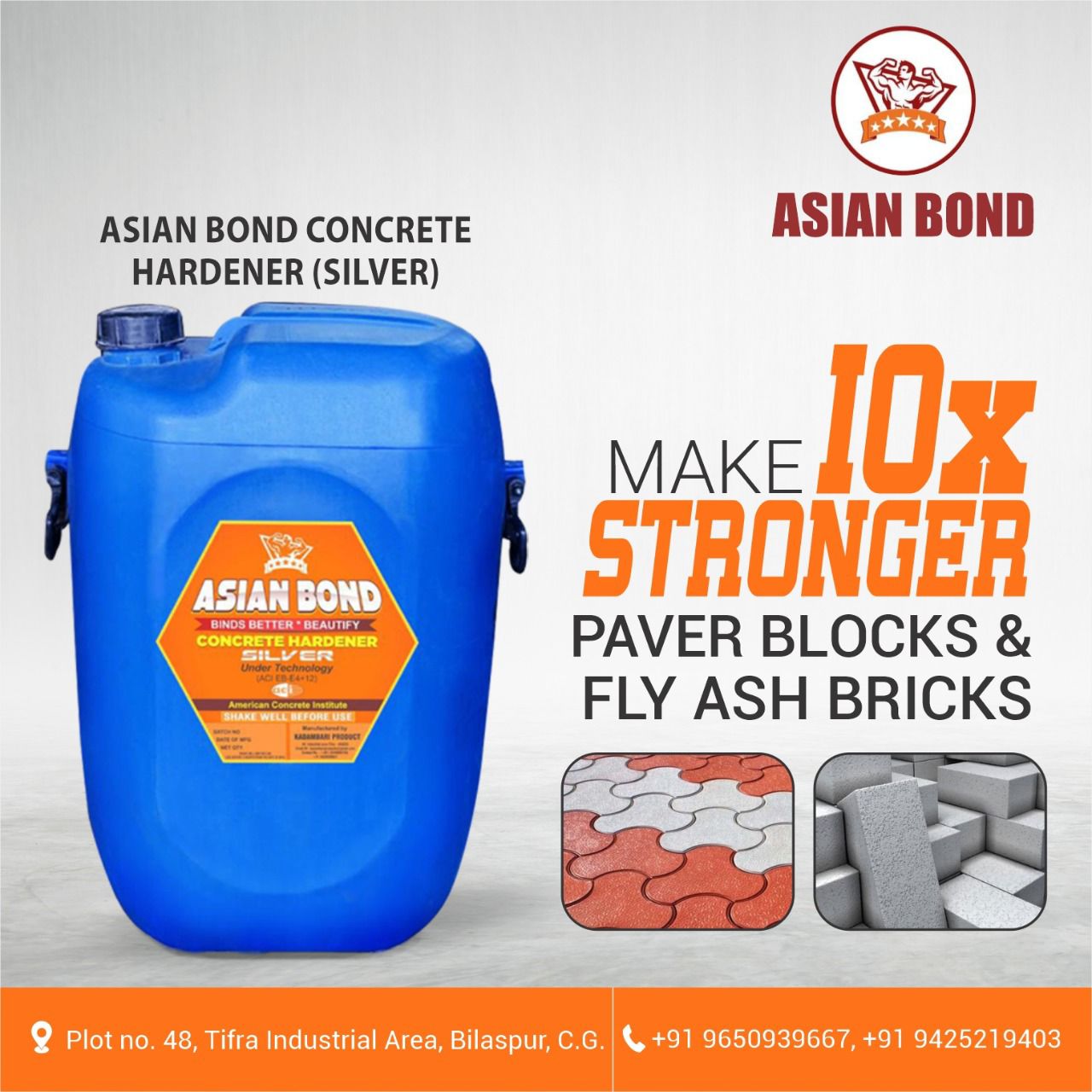
AsianBond has emerged as a trusted name among concrete hardener manufacturers in India, delivering consistent performance across demanding climates. Used by contractors, RMC plants, and industrial facilities nationwide, its formulations are engineered for real-world conditions rather than controlled laboratory environments.
How Concrete Hardeners Strengthen Concrete Internally
A concrete hardener penetrates deep into the substrate and reacts with free lime present in cured concrete. This chemical reaction forms additional calcium silicate hydrate (C-S-H), tightening the internal structure and closing microscopic pores. As porosity drops, dusting reduces, surface hardness increases, and resistance to abrasion improves.
By sealing internal capillaries, a chemical hardener limits water ingress and minimizes damage caused by temperature fluctuations. This internal densification allows concrete to withstand repeated thermal expansion and contraction while maintaining structural integrity under load.
Performance in High-Temperature Conditions
In extreme heat, concrete tends to lose moisture rapidly, which can interrupt hydration and reduce density. High temperatures increase vulnerability to salts, oils, and chemical exposure. A premium concrete hardener counteracts these effects by tightening pores and slowing moisture loss.
- Improves surface density and hardness under thermal stress
- Reduces evaporation-related cracking
- Maintains abrasion resistance even above 40–45°C
Industrial floors treated with AsianBond concrete hardener have demonstrated stable performance even in high-heat factory and warehouse environments across India.
Performance in Cold and Freeze Conditions
In colder climates, absorbed moisture expands as it freezes, leading to internal cracking and surface deterioration. A densified concrete surface limits water penetration, significantly reducing freeze–thaw damage.
AsianBond’s silicate-based formulations tighten pore structures, lowering moisture absorption and improving freeze resistance. This makes them suitable for high-altitude and northern regions where winter exposure is severe.
Coastal and High-Moisture Environments
Coastal regions expose concrete to high humidity and chloride attack, accelerating corrosion and surface breakdown. Concrete hardeners that effectively seal pores help block chloride ingress and slow internal deterioration.
AsianBond concrete hardeners are engineered to reduce permeability, offering long-term protection for slabs, pavers, and industrial floors in marine and high-moisture zones.
Types of Concrete Hardeners for Different Conditions
Concrete hardeners are formulated to suit specific applications and environments. AsianBond offers multiple variants to match site conditions and performance requirements.
- Silicate-based hardeners: Sodium, potassium, or lithium silicates that react with calcium hydroxide to form C-S-H.
- Industrial floor hardeners: Designed for heavy machinery, rolling loads, and high abrasion.
- Paver and block hardeners: Improve surface density, colour stability, and weather resistance.
Performance Comparison: Hardened vs Unhardened Concrete
| Property | Untreated Concrete | Concrete Treated with Hardener |
|---|---|---|
| Surface Hardness | Moderate | Up to 50% higher |
| Water Absorption | High | Drastically reduced |
| Heat Resistance | Low | Excellent |
| Freeze Resistance | Poor | Enhanced |
| Maintenance Needs | Frequent | Minimal |
| Service Life | 5–7 years | 10–15+ years |
Best Practices for Application in Extreme Weather
Extreme conditions demand careful timing and surface preparation. Even the best concrete hardener can underperform if applied incorrectly.
- Apply only after concrete has achieved sufficient initial strength
- Avoid application above 40°C or below 5°C unless specified
- Ensure surfaces are clean, dry, and free of contaminants
- Allow uninterrupted penetration and reaction time
AsianBond provides detailed technical datasheets and on-site guidance to ensure correct application under varying site conditions.
Why AsianBond Performs Consistently Across Climates
AsianBond’s advantage lies in focused research and formulation control. Continuous testing under real environmental stress ensures batch-to-batch consistency and predictable performance.
- 30–50% improvement in surface hardness
- Resistance to heat, moisture, and mild chemicals
- Low VOC, non-toxic formulation
- Reliable bulk supply with technical support
From the heat of Rajasthan to the cold regions of Himachal, AsianBond concrete hardener has proven its ability to protect surfaces under extreme and changing weather conditions.
Maintenance After Application
Proper maintenance further extends performance after hardener application:
- Clean regularly using neutral pH cleaners
- Avoid acidic or highly abrasive chemicals
- Inspect high-traffic areas every 6–12 months
With correct application and routine care, concrete treated with AsianBond concrete hardener maintains strength, appearance, and durability for years—despite harsh environmental exposure.