
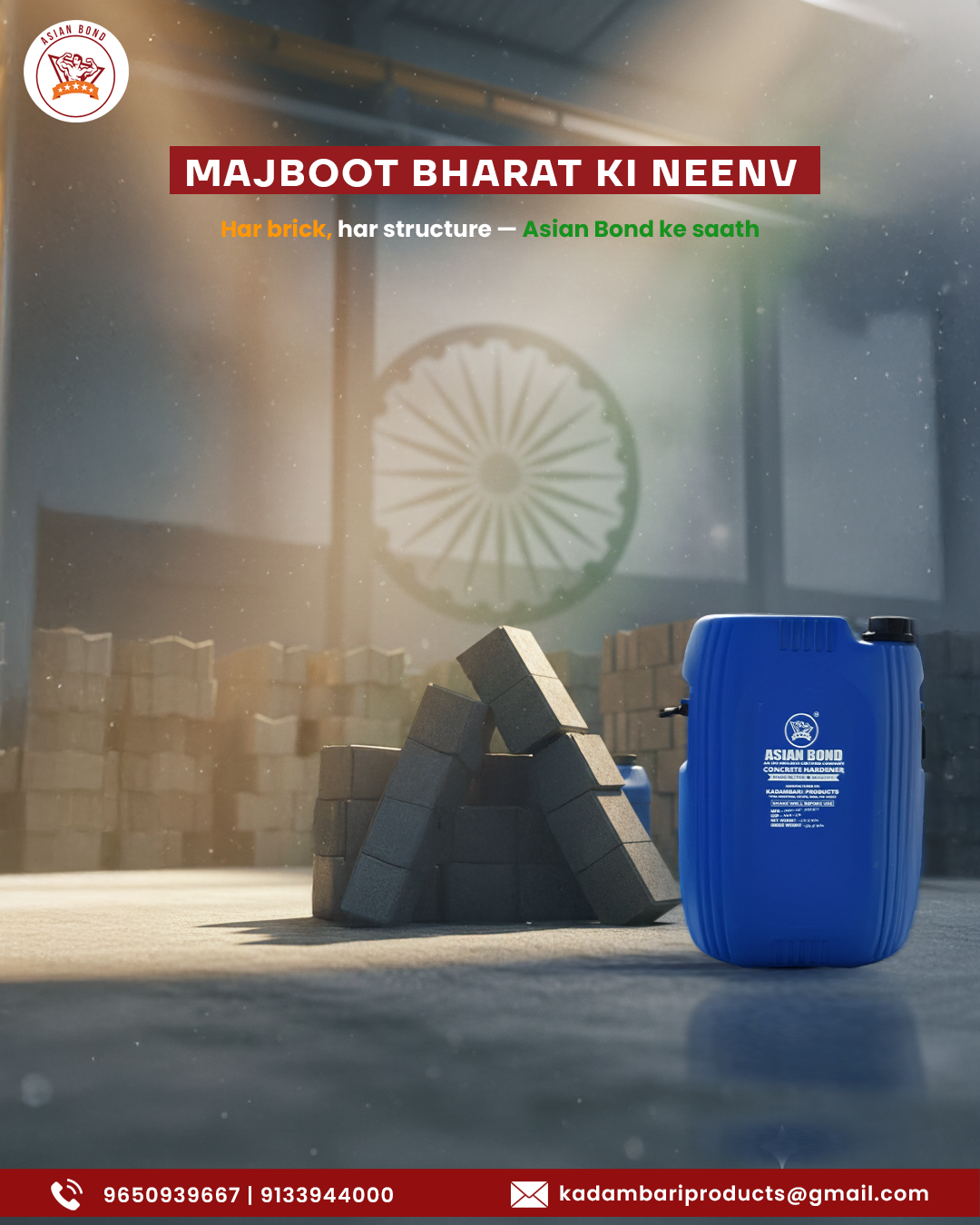
Concrete Hardener Guidelines for Construction Workers
Working with concrete means dealing with wear every single day. Warehouse floors absorb constant impact from machinery, walkways erode under steady foot traffic, and untreated slabs slowly turn dusty and weak. A reliable solution becomes essential once surfaces start breaking down. Modern concrete hardeners—especially trusted formulations produced in India by companies such as Asianbond—penetrate beneath the surface and reinforce concrete where it matters most.
Concrete Hardener Guidelines for Construction Workers
Working with concrete means dealing with wear every single day. Warehouse floors absorb constant impact from machinery, walkways erode under steady foot traffic, and untreated slabs slowly turn dusty and weak. A reliable solution becomes essential once surfaces start breaking down. Modern concrete hardeners—especially trusted formulations produced in India by companies such as Asianbond—penetrate beneath the surface and reinforce concrete where it matters most.
This guide outlines what works, what fails, and how construction workers can achieve dependable, long-lasting results using industrial-grade concrete hardeners.
Why Contractors Use Concrete Hardeners
Concrete hardeners are widely used in high-wear areas such as factories, warehouses, and commercial storefronts. Liquid formulations penetrate cement layers and react with lime residues inside the slab, forming tightly packed mineral structures. These reactions convert weak zones into dense, resilient surfaces capable of handling sustained stress.
On shop floors where heavy trolleys scrape across concrete all day, hardened surfaces resist breakdown far better than untreated slabs. Paving units exposed to weather and foot traffic also benefit when durability is added during production. When long-term performance is non-negotiable, proper treatment becomes part of the construction process itself.
In humid environments common across India, moisture resistance is critical. Asianbond’s liquid hardener strengthens concrete and brickwork without complicated steps. Applying the right treatment early prevents premature cracking and reduces future repair costs that often go unnoticed until years later.
Dos When Using Concrete Hardener
Prepare Surfaces Correctly
Always begin by inspecting the concrete surface. It must be solid, clean, and free from dust, grease, or loose particles. Surface preparation may involve grinding, blasting, or acid etching. For paver blocks, lightly moisten the surface without soaking it.
Concrete should typically cure for one to four weeks before applying a liquid hardener. This timing allows the product to penetrate deeply and react effectively.
Use Correct Dilution and Coverage
Concentrated hardeners often require dilution—commonly a 1:4 ratio with water for initial applications. Coverage generally ranges from 200 to 300 square feet per gallon, depending on surface porosity. Industrial floors may require higher concentration or additional coats.
When treating large areas, bulk purchasing can significantly reduce per-unit cost while maintaining consistent quality.
Apply Multiple Coats
One coat is rarely sufficient. Apply the hardener generously while the surface remains receptive, then allow four to six hours between coats. Two or three applications ensure proper penetration and long-term durability.
Test Absorption Before Full Application
Always conduct a small patch test. Highly porous surfaces absorb hardener quickly, while dense concrete may require additional scrubbing or repeated passes.
Seal After Hardening
Once the hardener has cured—typically after 24 hours—apply a compatible concrete sealer if required. This step enhances resistance to moisture, UV exposure, and surface staining, particularly for paver blocks and outdoor slabs.
Donts When Using Concrete Hardener
Do Not Apply on Wet or Unprepared Surfaces
Fresh or damp concrete prevents proper penetration. Dirt and residue block absorption. Without preparation, even high-quality products underperform.
Do Not Over-Dilute or Skimp on Application
Excess water weakens the chemical reaction. Inconsistent application leads to uneven hardness and premature wear. Measure accurately, especially when working at scale.
Do Not Ignore Weather Conditions
Rain, excessive heat, cold temperatures, and high humidity all affect curing. Plan applications around weather patterns, particularly during monsoon seasons.
Do Not Apply Over Painted or Sealed Surfaces
Existing coatings block penetration. Remove old sealers or paints before applying a concrete hardener.
Do Not Skip Safety Equipment
Concrete hardeners are alkaline. Use gloves, eye protection, masks, and ensure adequate ventilation during application.
Choosing the Right Concrete Hardener
Silicate-based hardeners—sodium, lithium, or potassium—offer the most reliable performance. Products from established Indian suppliers such as Asianbond provide deeper penetration, permanent dustproofing, and consistent results across paver blocks, bricks, and floors.
Compared to generic alternatives, high-quality formulations deliver greater strength gains, improved slip resistance, and better long-term value when purchased in bulk.
Real-World Performance on Job Sites
Contractors regularly report dramatic improvements after applying professional-grade hardeners. Warehouse floors once plagued by dust achieve measurable hardness increases. Paver blocks treated before monsoon seasons resist cracking under prolonged moisture exposure. Factory floors subjected to forklift traffic remain intact year after year.
These results come from consistent application, correct timing, and choosing a product designed for real-world conditions—not marketing claims.
Buying Concrete Hardener in Large Quantities
Pricing drops significantly when concrete hardener is purchased in bulk. While retail rates may range higher, volume purchases reduce per-liter costs and improve project economics. Tougher floors also mean fewer repairs, amplifying savings over time.
For builders handling large industrial or commercial spaces, bulk procurement ensures consistent supply, predictable costs, and uniform surface performance.
Final Thoughts
Concrete hardeners play a critical role in extending surface life, reducing maintenance, and improving job site performance. When applied correctly, they turn vulnerable slabs into durable working surfaces capable of handling years of abuse.
For construction workers and contractors focused on long-term reliability, choosing a proven concrete hardener and following proper application guidelines makes the difference between recurring repairs and surfaces that simply last.