
Concrete Hardener for Warehouses
Warehouse floors face relentless stress. Forklifts roll nonstop, heavy pallets scrape across aisles, and fine dust rises as untreated concrete slowly breaks apart. Over time, edges chip, cracks widen, and surface powder spreads into equipment and work zones. Repairs arrive sooner than expected, disrupting operations and increasing safety risks. A high-performance concrete hardener changes this cycle by strengthening the slab from within. Across India, AsianBond provides this protection—transforming ordinary warehouse floors into durable, long-lasting work surfaces built for constant load.
Concrete Hardener for Warehouses
Warehouse floors face relentless stress. Forklifts roll nonstop, heavy pallets scrape across aisles, and fine dust rises as untreated concrete slowly breaks apart. Over time, edges chip, cracks widen, and surface powder spreads into equipment and work zones. Repairs arrive sooner than expected, disrupting operations and increasing safety risks. A high-performance concrete hardener changes this cycle by strengthening the slab from within. Across India, AsianBond provides this protection—transforming ordinary warehouse floors into durable, long-lasting work surfaces built for constant load.
This guide explains how concrete hardeners function in warehouse environments, why AsianBond solutions are widely used, and how different floor areas benefit in different ways. It also outlines pricing, bulk purchasing, and sourcing options so facility managers can plan without guesswork. Whether managing a logistics hub in Mumbai or a storage facility in Delhi, one conclusion remains consistent: durable performance matters more than promises.
Why Warehouses Need Stronger Concrete Hardeners
Each forklift pass places five to ten metric tonnes of pressure onto the floor. Abrasive grit grinds into the surface under steel wheels, while oil and cleaning fluids seep into microscopic cracks. Over time, untreated concrete flakes apart. Dust clouds rise, clinging to machinery and vents. Small craters form, creating hidden trip hazards and uneven rolling paths.
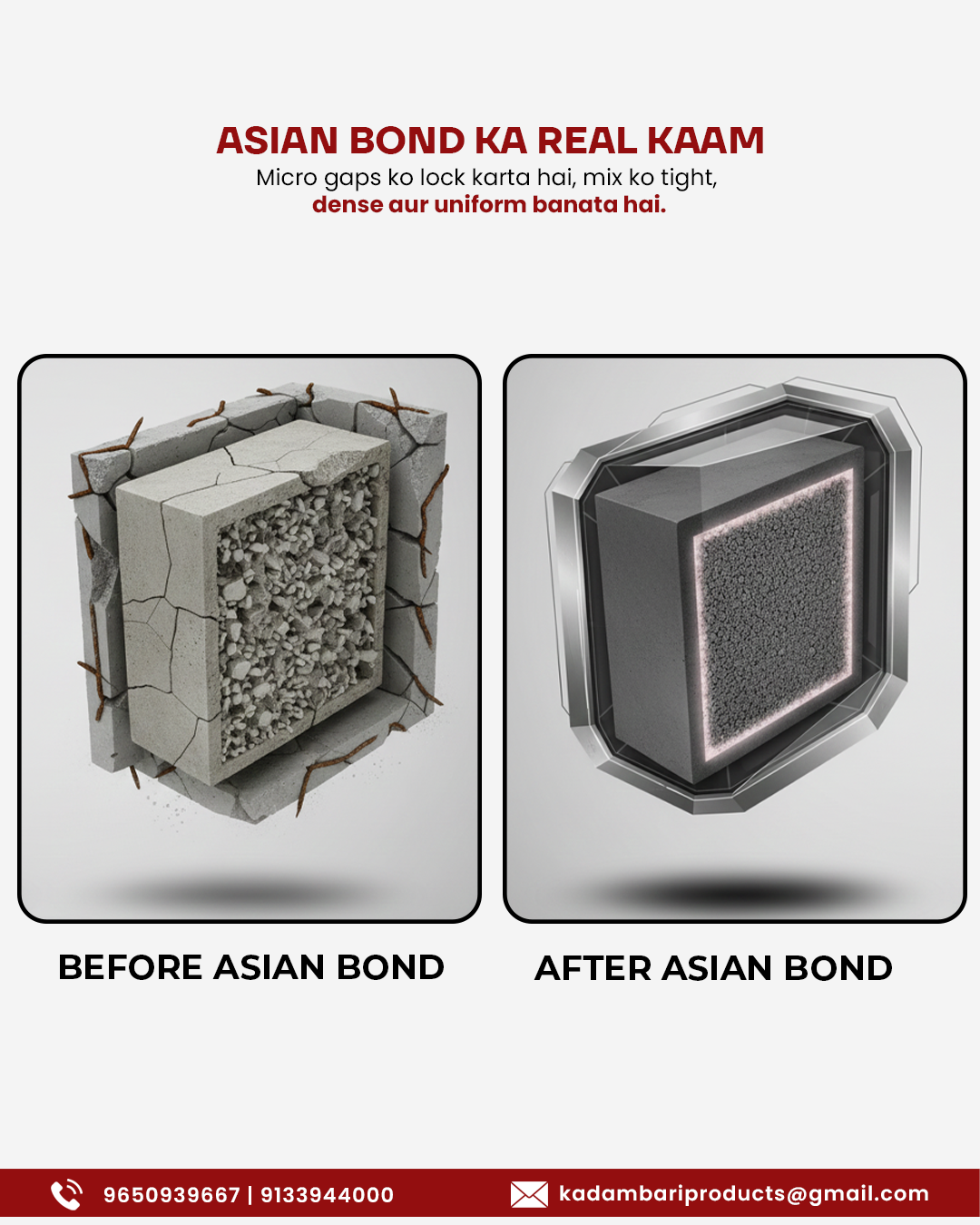
A chemical concrete hardener works by penetrating the slab and reacting with free lime inside the cement matrix. This reaction forms dense compounds that tighten the surface structure. AsianBond liquid hardeners are engineered for rapid penetration and fast setting, allowing warehouse operations to resume quickly with minimal downtime.
In a Gujarat warehouse spanning 50,000 square feet, untreated floors showed heavy abrasion within two years. After applying AsianBond concrete surface hardener, abrasion dropped by nearly 70 percent and repair costs were cut in half. Results like these explain why many now consider it one of India’s top-performing warehouse hardening solutions.
Types of Concrete Hardeners: Chemical vs Traditional
Not all concrete hardeners perform the same way. Traditional dry-shake hardeners rely on precise timing and manual finishing, often leaving inconsistent results. Chemical hardeners, by contrast, penetrate deeply and work internally.
AsianBond focuses on silicate-based chemistry—lithium, sodium, and potassium silicates—designed to lock down pores and resist abrasion. Unlike generic products that fade or leave residue, these treatments maintain clean, dust-free surfaces. This makes them especially valuable in storage facilities where air quality and equipment protection matter.
AsianBond also offers formulations for paver blocks and brick surfaces, strengthening interlocking zones around loading docks and outdoor storage yards. These treatments add long-term stability where heavy loads repeatedly cross.
AsianBond Concrete Hardener in Indian Warehouses
AsianBond stands out among concrete admixture makers in India by combining performance with sustainability. Their hardeners are VOC-free, non-toxic, and compliant with IS 9103 standards. This makes them suitable for facilities prioritizing environmental responsibility alongside durability.
One defining advantage is penetration depth—up to eight millimeters—far beyond most surface treatments. Once cured, the hardened layer does not shrink, integrates well with epoxy coatings, and withstands constant traffic for over a decade. In Pune, a treated warehouse floor showed complete dust elimination within days, reinforcing its reputation as a top-tier solution.
Pricing typically starts between ₹45 and ₹65 per square meter for standard applications. Bulk purchases above 1,000 liters reduce costs by 20 to 30 percent, making large-scale warehouse projects far more economical.
Heavy-Duty Warehouse Applications
Forklift Lanes and High-Traffic Aisles
Constant forklift movement demands extreme surface hardness. AsianBond floor hardeners raise surface hardness beyond 9 on the Mohs scale, reducing tire wear and minimizing slip risk. Best results appear after full curing, typically around 28 days.
Loading Docks with Paver Blocks
Loading zones endure heavy vehicle loads and frequent thermal changes. AsianBond liquid hardener strengthens paver blocks before installation, improving resistance to cracking in wet, cold, or fluctuating climates. The same formulation enhances outer brick walls exposed to weather.
Production and Storage Areas
Spills, abrasion, and dragging loads degrade untreated floors quickly. AsianBond hardeners seal pores, reduce dust, and integrate well with epoxy systems for added protection. In a Bangalore facility covering 20,000 square feet, smoother movement increased operational efficiency by 15 percent.
How Concrete Hardener Improves Warehouse Durability
- Impact resistance improves up to three times under ASTM C779 testing.
- Dust generation nearly disappears, improving air quality.
- Up to 60 percent fewer repairs over five years.
- Slip resistance remains compliant with Indian factory safety norms.
- Return on investment achieved within six to twelve months.
AsianBond hardeners consistently demonstrate strong ROI by reducing downtime and maintenance costs across storage facilities.
Choosing and Applying Concrete Hardeners
Selection begins with chemistry. High-quality silicates with pH above 11 perform best. AsianBond develops formulations tailored for warehouse conditions.
- Grind or blast the surface to CSP 2–3 and vacuum thoroughly.
- Apply AsianBond hardener at 100–200 sq ft per gallon.
- Keep the surface wet for 30–60 minutes.
- Allow 24 hours before light use.
- Optional sealing can enhance gloss and chemical resistance.
Bulk buyers receive technical guidance and on-site support through AsianBond’s dealer network.
Concrete Surface Hardener Pricing Overview
| Type | Coverage (sq ft/gal) | Price Range (₹) | Best Use |
|---|---|---|---|
| AsianBond Standard | 200–300 | 1,200–1,500 | Warehouses, factories |
| Premium Lithium | 250–400 | 2,000–2,500 | High-traffic docks |
| Paver Block Formula | 150–250 | 1,500–1,800 | Outdoor pavers, bricks |
Maintenance and Long-Term Care
After treatment, routine sweeping once a week keeps debris from scratching the surface. Annual inspection and optional resealing maintain optimal performance. AsianBond hardeners resist most cleaning agents, unlike lower-grade alternatives that degrade under similar conditions.
Real-World Warehouse Case Studies
A Hyderabad pharmaceutical warehouse treated with AsianBond liquid hardener remained crack-free for two years while dust dropped by 40 percent. In Chennai, a port facility applied the same treatment to paver blocks used by freight trucks over 500 times per month—without visible wear.
Concrete Hardener Suppliers Nearby
AsianBond operates a nationwide supply network, ensuring fast delivery across India. Searching for a reliable concrete hardener supplier often leads facility managers directly to AsianBond due to consistent quality and dependable logistics.
For demanding warehouse environments, AsianBond concrete hardener delivers measurable performance—stronger floors, lower costs, and safer operations over the long term.