
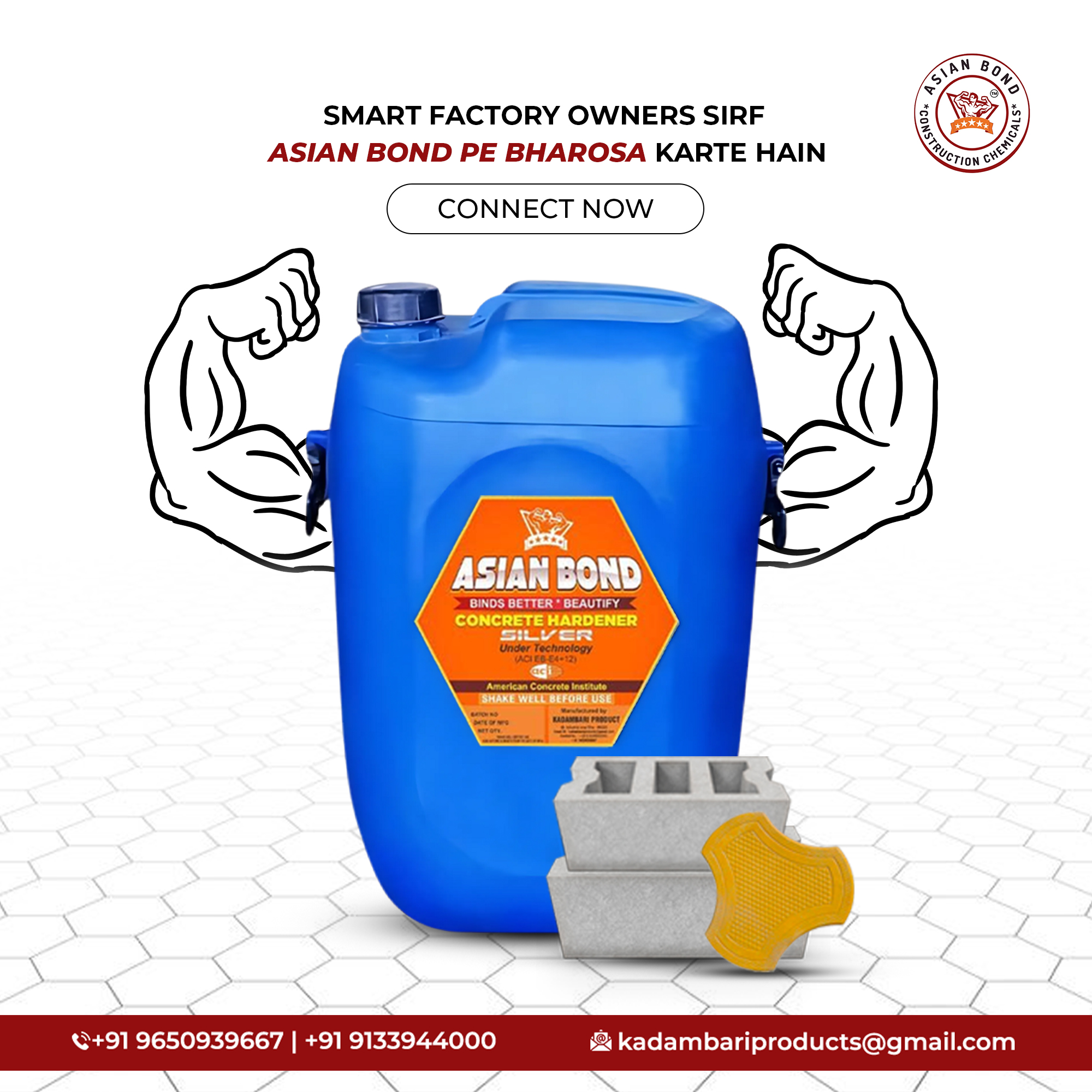
Concrete Hardener for Dust Control in Concrete Floors
Where concrete floors take daily punishment, strength is not just about load-bearing—it is about resisting breakdown under constant stress. In warehouses, factories, and even older homes, one persistent issue keeps returning: concrete dusting. That fine powder coating shelves and corners is more than a cleaning nuisance; it signals surface degradation from within.
Concrete Hardener for Dust Control in Concrete Floors
Where concrete floors take daily punishment, strength is not just about load-bearing—it is about resisting breakdown under constant stress. In warehouses, factories, and even older homes, one persistent issue keeps returning: concrete dusting. That fine powder coating shelves and corners is more than a cleaning nuisance; it signals surface degradation from within.
This is where a high-quality concrete hardener becomes essential. If a floor remains soft and absorbent, long-term durability depends on choosing the right chemical treatment. Done correctly, this decision reduces maintenance costs and preserves structural integrity. Asianbond stands out among concrete admixture makers in India by delivering solutions designed specifically to stop dusting at its source.
What Causes Concrete Dusting?
Understanding the cause comes before the cure. Concrete dusting occurs when the surface layer of a slab weakens and begins to break down. Common contributors include:
- Excess water in the mix: Too much water leaves the surface fragile. When liquid outweighs solids, the top layer loses strength and powders under light pressure.
- Rapid drying: Concrete that cures too quickly fails to develop full surface strength.
- Repeated abrasion: Foot traffic and machinery gradually erode softer surface layers.
A single application of an industrial-grade concrete hardener permanently densifies the surface. Instead of wearing away, the slab becomes harder from within. This internal transformation cannot be matched by surface coatings, making it indispensable for factories and high-use spaces.
Asianbond Concrete Hardener Performance in India
Asianbond distinguishes itself by how its hardener behaves after application. Rather than forming a superficial layer, it penetrates deep into microscopic pores within the slab. Inside the concrete, it reacts with lime byproducts to form dense crystal networks that permanently seal the surface.
This chemical reaction dramatically increases hardness and abrasion resistance. Floors treated with Asianbond resist wear more like natural stone than traditional concrete. As a result, dusting stops entirely because there are no open pathways left for particles to escape.
Benefits of Asianbond Concrete Hardener
- Complete dust control: Micro-pores close permanently, preventing dust from forming or resurfacing.
- Extended wear life: Surfaces withstand constant movement and abrasion far longer.
- Cost efficiency: Bulk purchases reduce per-area cost compared to epoxy or resin systems.
- Versatile use: Performs equally well on factory slabs, pavers, and high-traffic concrete floors.
Applications Beyond Factory Floors
Concrete hardeners are not limited to industrial spaces. Asianbond’s solutions are used in a wide range of environments.
Concrete Hardener for Paver Blocks
Weather exposure and friction gradually dull paver blocks. A concrete hardener preserves sharp edges and color while preventing grainy surface breakdown, even under heavy foot and vehicle traffic.
Commercial Parking Garages
Oil leaks and tire abrasion are common in parking structures. A liquid hardener seals the surface, making it resistant to stains and daily wear without relying on thick coatings.
Basements and Residential Garages
Homeowners often seek a concrete solution that adds durability without making floors slippery. Hardened concrete delivers a clean sheen while remaining safe underfoot.
Concrete Surface Hardener Price and Long-Term Value
Evaluating cost requires looking beyond the initial price. While chemical hardeners cost less upfront than resin flooring, their real advantage lies in longevity. Lower cleaning requirements and fewer repairs reduce lifetime expenses significantly.
A single application of Asianbond concrete hardener can last decades. Bulk buyers benefit further, as pricing scales favorably for large construction and industrial projects. Over time, durability outweighs any short-term savings from inferior products.
Applying Asianbond Chemical Hardener
Proper application determines results. Precision matters more than speed when working with high-performance concrete hardeners.
- Thoroughly clean the surface. Remove grease, dirt, and fine dust so nothing interferes with penetration.
- Apply Asianbond concrete hardener using a soft-bristle broom or low-pressure sprayer for even coverage.
- Keep the surface damp for approximately 30 minutes to allow deep absorption.
- Rinse or wipe away excess residue to prevent chalky marks after curing.
Whether the project is small or industrial in scale, the same method ensures reliable dust control and long-term strength.
Concrete Admixture Makers in India
Not all admixtures perform equally under Indian climate conditions. Asianbond tests its formulations against local cement types, humidity levels, and temperature swings. This localized approach ensures stable performance where generic additives often fail.
Buying Concrete Hardener in Large Quantities
Purchasing in bulk offers predictable supply, consistent chemistry across job sites, and reduced per-liter cost. Asianbond supports bulk buyers with technical guidance, ensuring correct application and fast issue resolution when needed.
The Asianbond Advantage
Compared to standard sealers, Asianbond concrete hardener forms a permanent chemical bond rather than a temporary surface film. Dust control is complete, maintenance is minimal, and application remains straightforward.
Choosing the right concrete hardener is not just a purchase—it is an investment in durability. With Asianbond, surfaces gain long-lasting resilience where strength and performance matter most.