
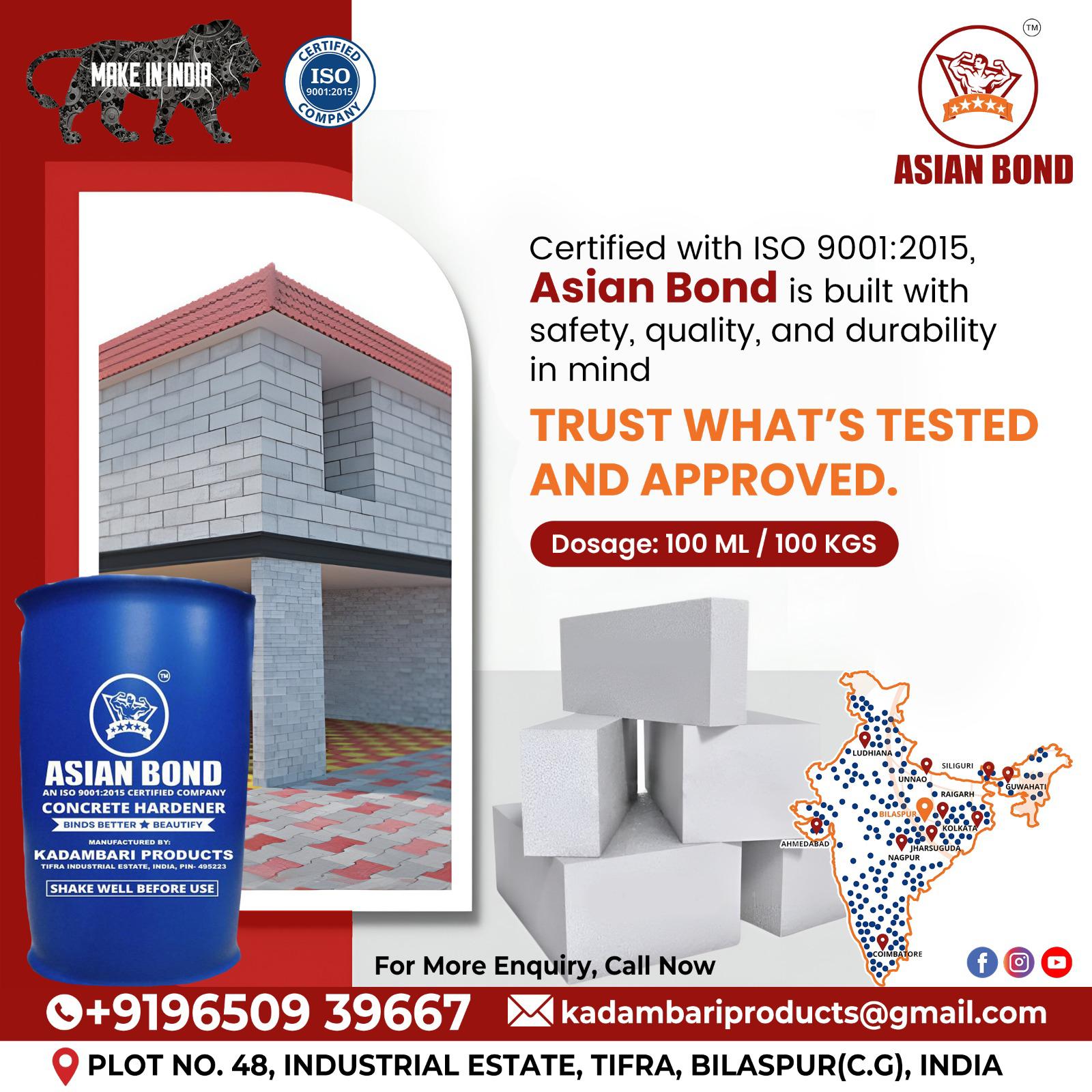
Concrete Hardener Compatibility with Polishing Systems
Concrete that delivers both durability and a refined polished finish is no longer a luxury—it is a standard expectation in modern construction. Builders today demand strength, sheen, and longevity without compromising performance.
Concrete Hardener Compatibility with Polishing Systems
Concrete that delivers both durability and a refined polished finish is no longer a luxury—it is a standard expectation in modern construction. Builders today demand strength, sheen, and longevity without compromising performance. Achieving that balance depends heavily on how well a concrete hardener works alongside polishing systems. Compatibility is not an afterthought; it determines results from the very beginning.
At AsianBond, years of focused expertise in concrete additives have shown one thing clearly: polished concrete success starts beneath the surface. The right hardener prepares the slab so polishing systems can do their job efficiently, consistently, and economically.
How Concrete Hardeners Support Polishing
Liquid concrete hardeners react chemically with free lime present in cured concrete. This reaction forms additional calcium silicate hydrate (C-S-H), which densifies the surface internally. As pores close, the slab becomes harder, less dusty, and more resistant to moisture, oil, and abrasion.
This internal strengthening is critical for polishing. A denser slab grinds evenly, accepts diamond tooling more effectively, and produces a uniform reflective finish. Instead of polishing a weak surface, contractors refine a solid, stable base.
Why Compatibility Matters
Polishing systems rely on consistent hardness across the slab. Incompatible sealers or surface-only coatings often lead to blotchy finishes, dull patches, or uneven scratch patterns. AsianBond concrete hardener penetrates deeply and integrates evenly, avoiding these issues.
- Uniform density across the slab
- Reduced scratching during grinding
- Smoother transitions between polishing stages
- Predictable performance with different cement mixes
For large-scale industrial or commercial projects, this consistency translates into time savings and reduced tooling costs.
AsianBond Concrete Hardener and Polishing Systems
AsianBond stands among India’s leading concrete additive manufacturers by delivering hardeners engineered to work seamlessly with both traditional and modern polishing systems. Manufactured to meet Indian Standards, these products integrate smoothly into construction workflows.
Whether used on factory floors, commercial lobbies, paving blocks, or high-traffic corridors, AsianBond hardeners prepare concrete surfaces to accept polishing without surface instability.
Application Process for Polished Concrete
- Surface Preparation: Remove debris and grind lightly to open surface pores.
- Cleaning: Vacuum or wipe thoroughly to remove dust.
- Hardener Application: Apply AsianBond liquid hardener evenly using a sprayer or roller.
- Absorption: Allow full penetration before proceeding.
- Polishing: Use diamond pads to refine and bring out sheen.
- Optional Sealing: Apply a compatible sealer to enhance stain resistance.
Proper timing and uniform coverage are critical. Skipping steps or rushing absorption often leads to inconsistent polish results.
Benefits of Using AsianBond with Polishing Systems
- Improved gloss and reflectivity
- Higher abrasion resistance
- Reduced dusting and staining
- Lower long-term maintenance costs
- Uniform finish across large surfaces
Edges remain consistent, polishing becomes more predictable, and final results remain stable over time.
Types of Concrete Hardeners and Polishing Outcomes
AsianBond offers different silicate-based hardeners to suit varying project demands:
- Sodium Silicate: Cost-effective, reliable for standard polishing projects.
- Potassium Silicate: Produces denser surfaces with minimal residue.
- Lithium Silicate: Premium option for high-gloss, advanced polishing systems.
Selecting the right formulation directly influences polishing efficiency and final appearance.
Best Timing for Hardener Application
Industry specialists typically recommend applying concrete hardener 7 to 14 days after pouring. At this stage, hydration has progressed sufficiently while still allowing optimal chemical interaction. Proper timing ensures smoother grinding, reduced effort, and better polish clarity.
Cost and Value Perspective
While cost is often a deciding factor, value lies in lifecycle performance. AsianBond offers competitive concrete hardener pricing that aligns with tight project margins while delivering long-term savings through reduced repairs and maintenance.
Bulk purchasing further reduces per-unit costs, making it a practical choice for large commercial and industrial developments.
Practical Tips for Best Results
- Check slab temperature and humidity before application
- Always test on a small area first
- Ensure polishing equipment is clean and well-maintained
- Allow full curing before introducing water-based finishes
Sustainability Advantages
AsianBond concrete hardeners are water-based and low in VOCs, supporting green building practices. When combined with polished concrete systems, they reduce the need for coatings, tiles, and frequent replacements—lowering environmental impact over time.
Final Thoughts
Polished concrete performs best when the hardener and polishing system are designed to work together. AsianBond concrete hardener strengthens slabs from within, allowing polishing systems to deliver smooth, durable, and visually refined surfaces.
Across India, professionals choose AsianBond not for promises, but for repeatable results. When chemistry meets technique, concrete becomes more than a surface—it becomes a long-lasting architectural finish.