
AsianBond Concrete Hardener Used in Food Processing
In food processing environments, floors face relentless stress. Heavy wheels roll through nonstop, liquids spill without warning, and machines push surfaces to their limits. Weak concrete fails quickly under these conditions. AsianBond concrete hardener is engineered for this exact reality—designed to strengthen floors from within so they resist breakdown year after year. This durability is not accidental; it is built through chemistry that permanently changes how concrete performs.
AsianBond Concrete Hardener Used in Food Processing
In food processing environments, floors face relentless stress. Heavy wheels roll through nonstop, liquids spill without warning, and machines push surfaces to their limits. Weak concrete fails quickly under these conditions. AsianBond concrete hardener is engineered for this exact reality—designed to strengthen floors from within so they resist breakdown year after year. This durability is not accidental; it is built through chemistry that permanently changes how concrete performs.
Across Indian food factories, AsianBond has earned trust quietly through results. Floors that once cracked and dusted now stay intact. What used to crumble now resists wear. This is not surface coating or short-term repair—it is structural reinforcement built into every layer of the slab.
Concrete Hardeners in Food Plants
Concrete hardeners work by penetrating into microscopic pores within the slab. Once inside, the liquid reacts with lime present in cement, forming a dense calcium silicate hydrate structure beneath the surface. This reaction boosts strength by nearly fifty percent and permanently eliminates dusting.
Food plants rely on this kind of protection because spills are unavoidable. Sugar, oils, acids, and cleaning chemicals attack untreated concrete aggressively. Without reinforcement, cracks expand and contaminants settle into hidden voids. AsianBond’s chemical hardener addresses this at the source by sealing the concrete internally rather than masking it on top.
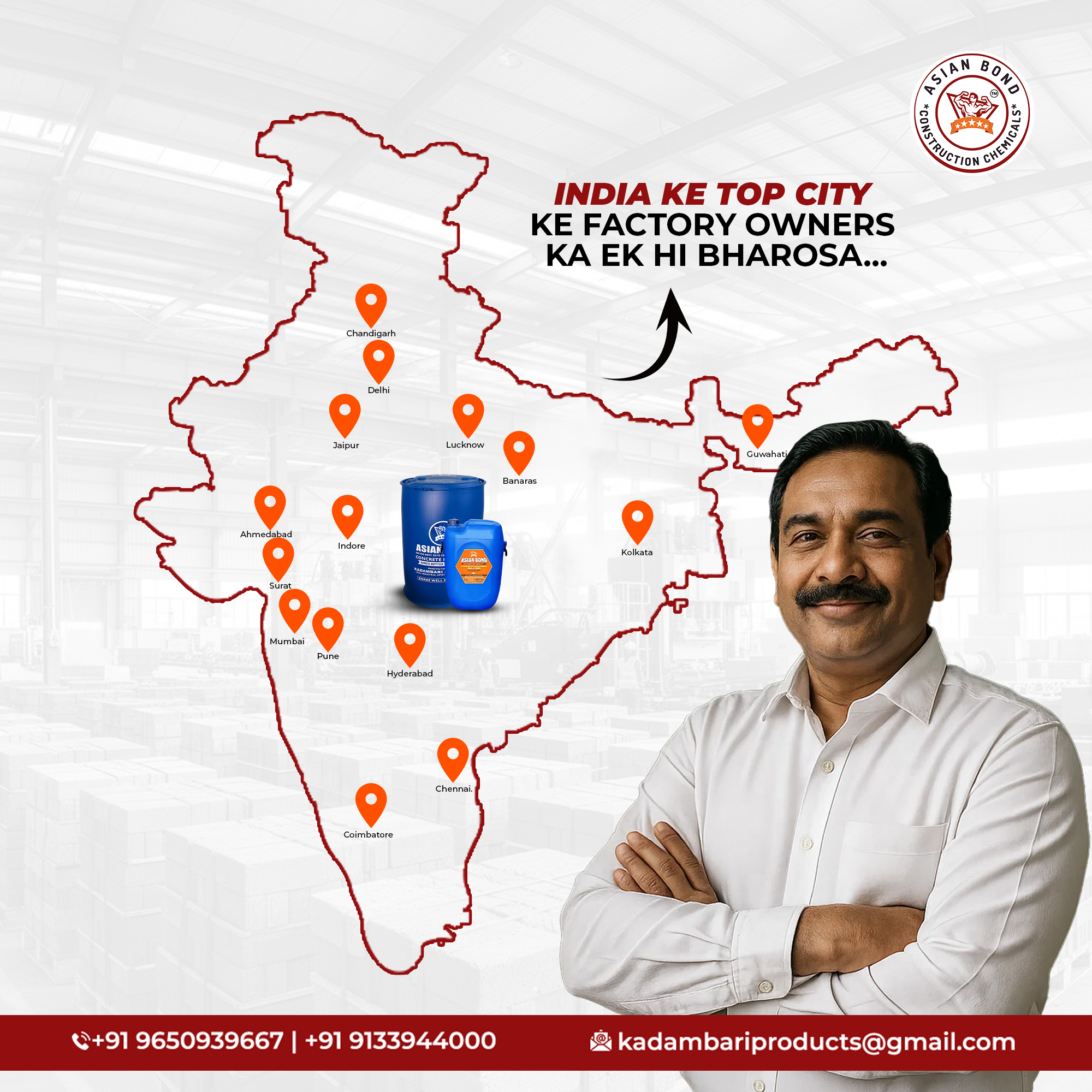
Unlike surface sealers, AsianBond’s formula penetrates deeply and locks strength into the slab for the long term. Distribution spans the entire country, making it easy to source whether projects are small or industrial in scale. Large-volume orders are handled smoothly, supporting extensive food production facilities without delays.
Loading zones built with paver blocks also benefit. Forklifts and pallet trucks cause edge chipping and surface erosion when blocks remain untreated. AsianBond hardener strengthens each block internally, keeping surfaces flat, tight, and ready for hygiene inspections at any time.
Why Food Processing Floors Need Specialized Hardeners
Floors in food plants endure abrasive cleaning cycles, chemical exposure, and frequent temperature changes. Ordinary concrete cannot withstand these conditions indefinitely. AsianBond’s floor hardener is formulated specifically for such environments—resistant to detergents, stable during thermal shifts, and safe for food-adjacent use.
The product contains no toxic components and emits minimal fumes, keeping air quality intact in sensitive production areas. Compliance with food safety norms ensures contaminants remain sealed out. The liquid hardener penetrates up to 8mm into the slab, closing micro-cracks where bacteria and moisture would otherwise accumulate.
Concrete surface hardener pricing at AsianBond balances performance with cost efficiency. Bulk purchasing reduces per-liter cost while delivering consistent strength across large facilities. Foundations treated early remain durable far longer, especially in areas such as dairy rooms, bakeries, meat processing halls, and cold storage zones.
AsianBond Concrete Hardener Benefits
- Dust-free surfaces: Micro-pores seal completely, preventing airborne particles in food environments.
- High abrasion resistance: Surfaces withstand heavy foot traffic and rolling equipment with ease.
- Chemical resistance: Holds up against acids, oils, and aggressive sanitation products.
- Reduced cleaning time: Smooth, dense surfaces require less scrubbing and fewer labor hours.
In one Bhopal-based food factory, slips dropped by seventy percent within weeks of application. Treated paver blocks in storage areas remained intact despite round-the-clock movement. Consistent results like these explain why AsianBond is widely regarded as one of the most effective concrete hardeners used in India.
The chemical hardener works equally well on new slabs and older surfaces. Supply networks across Madhya Pradesh and beyond ensure quick access whenever needed.
AsianBond Compared with Generic Concrete Hardeners
| Feature | AsianBond | Generic Options |
|---|---|---|
| Penetration Depth | 6–8 mm | 2–4 mm |
| Strength Increase | 40%+ | 20–30% |
| Food-Safe Compliance | FDA compliant | Often not certified |
| Bulk Availability | Nationwide | Limited |
Application Guide for Food Processing Floors
- Prepare the surface using diamond grinding to open pores and remove contaminants completely.
- Dilute the liquid concrete hardener according to instructions, typically 1:4 with water for initial coats.
- Apply evenly using a sprayer or roller, working in controlled sections to ensure uniform penetration.
- Allow the product to soak before applying additional coats if required.
- Curing takes one to two days; light foot traffic is usually possible within twelve hours.
Two coats are recommended for high-wear food facilities. Purchasing the concrete hardener in large quantities helps distribute cost efficiently across wide floor areas.
Real-World Case Studies
Dairy Plant, Madhya Pradesh: Dust contamination near processing lines dropped sharply after treatment. Cleaning time was reduced by nearly half.
Poultry Processing Unit: Harsh chemical damage declined significantly, cutting repair needs by nearly two-thirds in the first year.
Bakery Chain: Sugar residue stopped bonding to floors, simplifying sanitation routines and improving slip resistance.
Cost Analysis and Return on Investment
While concrete surface hardeners may appear costly upfront, long-term savings are substantial. A 10,000 sqm facility investing in AsianBond avoided recurring annual repair costs that far exceeded the initial spend. Bulk pricing can reduce rates to nearly ₹120 per liter, delivering exceptional ROI over a decade.
Maintenance and Longevity
After application, daily sweeping and mild cleaners are sufficient. In high-stress zones, reapplication may be considered after five to seven years. Avoid ammonia-based cleaners, as they can weaken chemical bonds over time.
Frequently Asked Questions
What is the best concrete hardener for food processing floors?
AsianBond offers food-safe, high-performance hardeners that deliver long-lasting durability without compromising hygiene.
Can it be used on brick and paver blocks?
Yes. The liquid concrete hardener works effectively on bricks, slabs, and paver blocks.
Why Choose AsianBond
AsianBond stands among leading concrete admixture makers in India by designing solutions specifically for demanding environments like food processing facilities. Their concrete hardener is not generic—it is built to perform under pressure, delivering strength, safety, and long-term value.
Choosing AsianBond means choosing stability, performance, and reliability. For food-grade flooring that lasts, this is where durability begins.